
Drilling technology has undergone significant evolution over the years. Today, industries ranging from oil and gas to utilities and telecommunications have access to multiple drilling methods, each suited to different goals. Among the most debated comparisons in modern drilling is the comparison between directional and traditional drilling. Both techniques have their advantages, but when it comes to efficiency, environmental impact, and versatility, one often stands out more than the other.
Understanding how these methods differ can help engineers, project managers, and decision-makers select the most suitable approach for their specific project needs.
What is Traditional Drilling?
Traditional drilling, also called vertical drilling, involves boring straight down into the ground from a single surface point. This method has been widely used for decades, especially in oil and gas exploration. It is straightforward, cost-effective for shallow wells, and requires less planning.
However, it has some limitations. Vertical drilling only accesses what is directly beneath the drill site. In areas where resources are unevenly distributed or lie beneath obstacles such as buildings or rivers, this approach may not be ideal. In such cases, the inflexibility of traditional drilling methods can lead to higher surface disruption and less efficient resource extraction.
What is Directional Drilling?
Directional drilling allows operators to steer the drilling path at various angles. Instead of going straight down, the drill can curve, bend, and reach targets that are not vertically aligned with the surface entry point. This technique has gained popularity due to its adaptability, especially in urban environments or sensitive ecological areas.
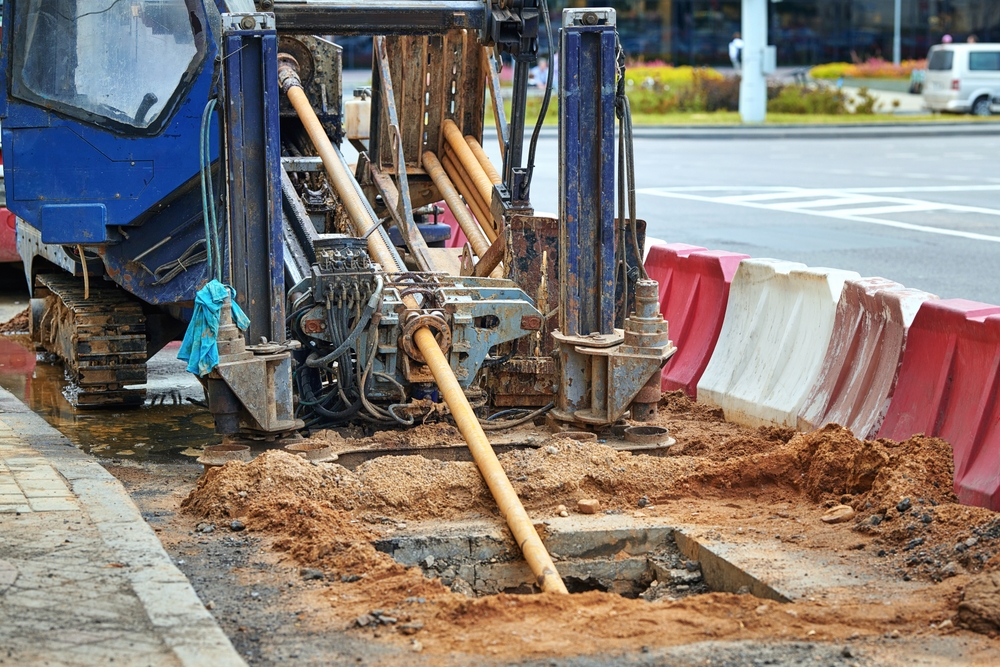
In Edmonton, directional drilling projects, for example, employ this approach to install pipelines under roads, rivers, or buildings without disturbing surface infrastructure. It also enables companies to reach multiple underground targets from a single surface location, which can reduce environmental footprint and overall costs.
Factors to Consider
Here’s how you can evaluate the two methods before narrowing down to one:
1. Access and Reach
Traditional drilling is limited to vertical targets.
Directional drilling can reach multiple locations from a single site, making it ideal for resource clusters or areas that are difficult to access.
2. Surface Disruption
Traditional drilling requires multiple drill sites to reach spread-out targets, increasing land use and potential damage.
Directional drilling minimizes surface disruption by using fewer entry points, which is particularly valuable in populated or environmentally sensitive areas.
3. Cost-Effectiveness
Vertical drilling may seem more affordable upfront due to its simplicity.
Directional drilling may reduce long-term costs by minimizing land acquisition, surface restoration, and infrastructure interference.
4. Precision and Control
Traditional drilling offers less control once the drill is in motion.
Directional drilling provides better guidance and targeting, which can improve success rates and reduce wasted effort.
Applications Beyond Oil and Gas
While directional drilling is often associated with energy projects, it also plays a key role in civil engineering, fibre optic installations, water lines, and sewage infrastructure. In cities like Edmonton, directional drilling helps meet modern infrastructure needs while minimizing disruptions to daily life.
Which One is Right for Your Project?
Choosing between traditional and directional drilling depends on your project’s location, budget, depth, and environmental factors. For straightforward, vertical targets, traditional drilling may still be sufficient. But for complex jobs—especially those in urban, layered, or protected environments—directional drilling often proves to be more efficient and practical.
Unlock Smarter Drilling Solutions Today!
Looking for expert support in directional drilling Edmonton projects or beyond? Taber Solids Control delivers reliable drilling solutions tailored to your needs. Explore the difference that efficiency and precision can make—contact our team to learn more.